
Cell Growth Without Additional Coatings
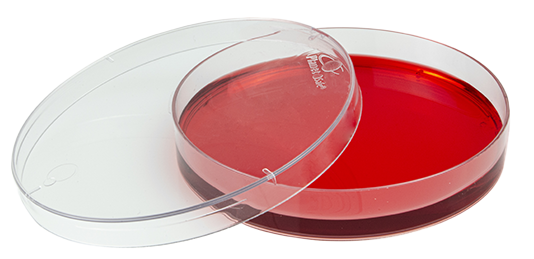
Planet-Safe® Cell Culture dishes made from PLA are considerably more hydrophilic than petrochemical resins such as polystyrene. This beneficial property allows a variety of anchorage-dependent cell species to grow on the dish surface without added coatings or treatments.
Improved Cell Adhesion
Planet-Safe® cell culture surfaces exhibit improved cellular adhesion when compared to a leading brand. Planet-Safe® 96-well F-bottom microplates and a commonly used 96-well microplate (Supply Sample) were compared NBT-II cells were seeded in 0.2ml growth medium at various densities.
Cellular adhesion was recorded by measuring the metabolic activities of adhered cells at 24hrs post-seeding. The Planet-Safe® surface was found to contain, on average, 42% more cells indicating a surface that is more conducive to cell adhesion. Evaluation of this information using the statistical t-Test confirms that difference in measurements is statistically significant.

Reliable Cell Growth

Cells propagated during the cell adhesion study were seeded at a density of 1-2 x 10^4 cells/well in 0.2ml growth medium. Cell growth measurements began 24 hours post-seeding and continued over the following 3 days. The resulting data, shown in Tables 1-3, indicates identical growth rates between the Planet-Safe® and Supply Sample surfaces.
Use Across Multiple Cell Lines

Test cultures with Planet-Safe® Cell Culture dishes show normal growth and support of several cell lines including adherent Human Embryonic Kidney-derived cells (HEK293), Monkey Kidney Fibroblast-derived cells (COS), and others. Observed growth rate and confluence results were comparable to leading tissue-culture treated polystyrene dishes.
Increased Stability & Reproducibility
During the washing step, a monolayer of cells is subject to a level of fluid force that can cause cell rupture and lead to cell loss. This fluid shear is the result of inconsistencies on the culture surface. In side-by-side testing Planet-Safe® Cell Culture dishes exhibited a much lower percentage of fluid shear compared to other available popular brands.